



How To Budget For A New Car? Tips & Advice

Smart Car Budgeting: A Step-by-Step Guide
Buying a new vehicle from Preston Hyundai of Millsboro, is exciting, but it is also a big financial decision. Long before you pick colors or compare trim level options, you should think through how to budget for a new car in a way that fits your life and your future plans. When you look beyond the sticker price and focus on your own numbers, you can keep car shopping focused on a realistic budget instead of guesswork.
This step-by-step guide walks car buyers through how to budget for a new car using clear, practical steps. You will look closely at your monthly income and expenses, understand the total cost of the vehicle, compare financing options, and prepare for ongoing expenses such as fuel costs, auto insurance, and routine maintenance costs. With a solid plan in place, you can visit Preston Hyundai of Millsboro, knowing how much to spend on a new car and move forward with confidence.

Start With Your Income and Everyday Bills
The first step in learning how to budget for a new car is to understand your cash flow. Begin by adding up your monthly take-home pay from all sources, including wages, side income, and any regular deposits into your bank account. Looking at monthly income alongside your annual income helps you see the full picture of your financial situation instead of focusing on a single paycheck.
Next, list out your recurring monthly expenses. Include housing, utilities, groceries, subscriptions, child care, and payments on credit cards, student loans, and other obligations. Once you see how much is already committed each month, you can start shaping a monthly budget that includes room for a monthly car payment without crowding out other priorities. Many drivers find it a good idea to keep transportation within a set slice of their spending so car-related expenses do not overwhelm the rest of their goals.
A common good rule you will see in financial advice is to keep all car costs, including fuel expenses, insurance costs, and parking, within a reasonable share of your income. That guideline serves as a good rule of thumb as you decide how to budget for a new car, leaving space for a savings goal and an emergency fund. If the numbers feel tight, adjusting expenses before starting a vehicle purchase can make the entire plan more comfortable.
See the Full Price Beyond the Window
Once your income and bills are clear, the next step in budgeting for a new car is understanding the full cost of car ownership. The sticker price or suggested retail price on a vehicle at Preston Hyundai of Millsboro, is an excellent starting point. To understand the total cost, you also need to factor in sales tax based on the local tax rate, registration fees, documentation charges, and other additional costs that show up on the final paperwork.
From there, shift your focus to ongoing expenses that you will face during the life of the loan. Ownership costs, such as auto insurance, routine oil changes, tires, brakes, and other maintenance, all play a role in the vehicle’s cost over time. Fuel economy matters, too; a vehicle with strong fuel efficiency will keep fuel costs and fuel expenses more predictable, while a less efficient model may raise car costs each month.
If you are comparing car models or different model years, look at how their ownership costs and projected resale values differ. A vehicle with a reputation for durability and solid resale value can help you protect the car’s trade-in value when you return to Preston Hyundai of Millsboro for your next vehicle. Working these details into how to budget for a new car keeps the focus on long-term value, not just today’s price tag.
Plan Your Down Payment and Financing Strategy
With the big-picture costs in mind, the next step in how to budget for a new car is shaping your down payment and financing plan. If you currently own a car, its trade-in value can lower the upfront cost. Knowing this number in advance lets you predict the loan amount you will need to cover the remaining cost of the vehicle.
Your credit score and credit history will influence your loan interest rate, available loan term choices, and approval with different lenders. Many shoppers apply with a local credit union, their own bank, and Preston Hyundai of Millsboro to compare financing options, including offers from third-party institutions. It is helpful to see how a 48-month loan, 60-month loan, or even a longer-term loan changes both the monthly car payment and what you pay over the life of the loan.
As you think through how to budget for a new car, consider whether a larger down payment fits your savings goal. A higher upfront cost can reduce loan payments and loan interest over time, which can free space in your monthly budget for other goals. If the numbers feel tight, it may be wise to give yourself more time to save before committing to a vehicle purchase, especially if you are working toward your first car and still building credit.
Use Online Tools, Credits, and Calculators
Before you visit, our online resources can help you see how to budget for a new car in real numbers instead of rough estimates. Start with an auto loan calculator or car affordability calculator and enter the sticker price, estimated sales tax, registration fees, and a likely interest rate based on your credit score, then compare those results with our online payment calculator tool to see how different vehicles and loan terms affect your monthly car payment. Adjust the loan term to see how a shorter schedule compares with a longer one and how each affects your monthly budget and overall car costs, so you can narrow in on a price range that feels realistic for your new car without straining your financial situation.
As you compare car models, note differences in safety features, trim level, model year, and fuel economy. These factors can influence insurance premiums, ownership costs, and even future resale value. Keeping notes on how each option fits your price range helps you fine-tune how to budget for a new car that aligns with both your financial situation and your driving needs.
Choose the Right Vehicle
Once your numbers are in place, you’ll be ready to bring how to budget for a new car into real life on the lot. Share your target monthly budget, price range, and preferred loan term with our team so they can guide you toward car models that make sense. Whether you are shopping for your first car or upgrading your current ride, staying honest about your limits helps you focus on the right options.
During car shopping, think about how you will use your new vehicle day to day. Consider commute length, traffic patterns, weather, and how often you carry passengers or cargo. For some car buyers, compact options with strong fuel efficiency and lower car-related expenses are a smart fit. Others may look at crossovers, trucks, or electric vehicles that support hobbies, family needs, or work demands while still matching how to budget for a new car.
Don’t forget to think ahead to your next vehicle, as well. A model with solid market value and predictable ownership costs can make it easier to trade in your new vehicle in the future. That future trade-in value becomes part of your plan for how to budget for a new car again when it is time to upgrade.
Prepare For Insurance and Local Details
Another key part of how to budget for a new car is understanding how insurance fits into your plan. Before you finalize anything, request quotes from more than one insurance provider. Insurance rates and insurance costs will depend on your driving record, the vehicle you choose, and the safety features it offers. Comparing auto insurance quotes side by side can reveal how car prices and trim level choices influence premiums.
As you review policies, confirm how insurance premiums might change over time and how they fit alongside your other monthly expenses. Building those numbers into how to budget for a new car keeps your plan grounded in reality. You will also want to think about vehicle ownership details such as where you park, how many miles you drive annually, and any car-related expenses that are specific to where you live, like tolls or city parking permits.
Finally, make sure your paperwork expectations line up with your budget. Ask our team to walk you through every line item, including sales tax, tax rate, fees, and any additional costs tied to protections or warranties. When you see the entire structure of the cost of the vehicle and understand exactly how to budget for a new car, you can sign with confidence knowing your plan fits your bank account and your long-term goals.

Put Your Plan Into Action
By taking time to learn how to budget for a new car around your real numbers, you turn a big purchase into a thoughtful step in your financial life. You’ll have looked at monthly income, monthly expenses, and annual income, and have shaped a realistic budget that respects your savings account and emergency fund. You’ll understand how loan amount, loan term, and interest combine with taxes, fees, and ongoing expenses to create the total cost of car ownership.
When you bring that work to Preston Hyundai of Millsboro, you can focus every conversation on how to budget for a new car that fits your priorities instead of reacting in the moment. Whether you are choosing your first car or planning your next vehicle, your preparation helps ensure that your new car supports your lifestyle, your savings goal, and your long-term vehicle ownership plans.
GET STARTEDHow Do You Get A Lower Monthly Car Payment

How Your Tax Refund Can Help You Drive Home With a Lower Car Payment
At Preston Hyundai of Millsboro, we meet a lot of drivers who look at their statement and immediately wonder, “how do I lower my monthly car payment?” If you are expecting a tax refund this year, it can be a powerful tool for reshaping your car loan payment and overall personal finance plan. Many shoppers search online for how to get a lower car payment, but the real answers depend on your unique financial situation, your current car, and where you are in the car-buying process. Our goal is to walk you through practical, real-world ways to turn that refund into a smarter car purchase or refinance so you can feel more confident every time you make payments.
Whether you are shopping for a new car, thinking about a reliable used car, or looking to adjust an existing loan, your refund can act like an instant larger down payment or a targeted lump sum toward what you already owe. Using that amount of money wisely can reduce your monthly costs, cut the amount of interest you pay over time, and ease the financial burden that comes with keeping a vehicle in your budget while you stay focused on how to get a lower car payment that truly fits your life.

What a Lower Monthly Payment Really Means for You
When you ask us how to get a lower car payment, we start by looking at the numbers behind your monthly loan payment. The key ingredients are your total loan amount, interest rate, loan term, and any taxes or fees that were rolled into your car purchase. Changing even one of these pieces can unlock a lower monthly payment, but each choice affects the overall cost of the vehicle in a different way.
A larger down payment using your tax refund immediately reduces the loan amount and the principal balance, which means you are financing a smaller remaining balance from day one. That can help you qualify for a lower interest rate or a lower rate overall and pay less interest across the full time frame of your contract. If you choose a longer loan term, you will usually see a lower payment each month, but a longer term also increases the amount of interest you pay. A shorter-term loan often carries a higher monthly bill, yet it can be a good idea if your goal is to pay less interest and own the vehicle free and clear sooner, especially if your top priority is how to get a lower car payment over the life of the loan.
Your credit report also plays a big part. Drivers with a higher credit score or even excellent credit often qualify for strong auto loan rates, while shoppers with lower credit may face higher interest rates at first. The good news is that as you stay in good standing on your account and avoid missed payments, your profile can improve over time, and that opens doors for future changes that support how to get a lower car payment.

Turning Your Tax Refund Into a Powerful Down Payment
One of the simplest answers to how to get a lower car payment is to bring more money to the table on day one. When you apply your tax refund as part of a larger down payment on a new vehicle or on used vehicles that fit your lifestyle, you shrink the loan amount and reduce the remaining loan balance before you even drive off the lot. That can also reduce the sales tax you pay on your car purchase, depending on how your deal is structured in Millsboro, DE.
Your refund can team up with the trade-in value from your current car to build that down payment. Using tools such as Kelley Blue Book helps you estimate your car’s current value and car’s value so you can walk into the showroom informed and ready to negotiate. If you can sell your vehicle through a private sale for more than the trade figure, that extra cash can go straight toward your down payment and move you closer to your goal of how to get a lower car payment.
In some cases, using part of your refund to pay down your existing loan is the smart move. Reducing your principal balance ahead of schedule can lessen the negative impact of being upside down on the vehicle and may qualify you for gap insurance or strong refinancing terms sooner. Before you do this, talk with our team at Preston Hyundai of Millsboro about any prepayment penalties in your contract, so you know exactly how much of your tax refund is going toward how to get a lower car payment instead of fees.
Using Your Tax Refund to Restructure or Refinance
If your vehicle already fits your needs but the payment doesn’t, your tax refund can help you refinance your auto loan to reshape the terms of your agreement. By paying down part of the balance and then applying for a new loan with different lenders, you may qualify for a lower interest rate. This strategy is especially helpful if you started with a high interest rate due to bad credit, and you have since worked hard to rebuild your profile and learn how to get a lower car payment going forward.
When you sit down to talk with your current lender, they will review your credit report, your recent payment history, and whether you are in good standing. A stronger credit history, fewer hard inquiry entries, and an improved credit score can all make it easier to secure a lower car payment through updated terms. We can also help you compare offers from a local credit union, banks, and other financial institutions so you can see how to get a lower car payment without taking on more risk than you are comfortable with.
Changing the structure of your loan can take several forms. Some drivers look for a loan modification with their existing lender, which might adjust the loan term, payment due date, or fees to ease short-term pressure. Others prefer classic refinancing, choosing a longer loan term to create a lower monthly payment or opting for a shorter term that focuses on paying less interest in the long run. Either way, your tax refund can reduce the remaining balance first, so you end up paying less interest on a smaller principal over the life of the agreement, and stay focused on how to get a lower car payment that fits your budget.

Deciding Whether to Trade, Keep, or Upgrade Your Vehicle
For some guests, the best way to improve their budget is to rethink the vehicle itself. That might mean trading in for one of our top picks of fuel-efficient used vehicles, choosing a modest new vehicle instead of a fully loaded model, or even paying down an existing loan and driving your current car for a few more years. Your tax refund can help with any of these paths, whether you want to boost your trade-in value, reduce your remaining loan balance, or simply save for upcoming maintenance so you can make payments on time while still working toward how to get a lower car payment that feels realistic month after month.
As you compare options, we will walk you through the car-buying steps from a budget-first angle. Together, we can look at your monthly loan payment, expected monthly costs like fuel and insurance, and how your tax refund can lower the car loan payment itself. We also talk through whether you want a short-term plan to simply get through a tough season or a longer loan term that prioritizes a lower monthly payment for the long haul. All of this fits into a bigger car-buying strategy focused on how to get a lower car payment, not just this year but over the life of the vehicle.
Another simple way to lower your car payment over the life of the loan is to use your tax refund to make a few extra payments throughout the year. Even small additional amounts applied directly to principal can shorten your term, reduce the amount of interest you pay, and give you flexibility if you ever face a tight month later on, while still aligning with your plan for how to get a lower car payment in the long run.
Putting It All Together at Preston Hyundai of Millsboro
When you are ready to talk through how to get a lower car payment with your tax refund, our team will start with a simple conversation about your goals. Are you hoping to refinance an existing loan, exploring a new auto loan for a different model, or curious whether a loan modification could help you stay in good standing with your current lender? Do you want to focus on less interest paid, a lower interest rate, or a shorter term that clears the balance quickly? Your answers guide us toward the combination of car purchase choices and financing options that match your financial position.
We also explain how different lenders look at your credit report, credit history, and recent activity. If you are aiming for a refinance in the near future, making on-time payments, avoiding new hard inquiry marks unless necessary, and keeping your accounts in good standing can all improve your chances of qualifying for a lower rate. Over time, this can translate into a noticeably lower car payment and give you more room in the budget for other priorities tied to lowering your car payment.
Your tax refund is a powerful tool, and when you pair it with clear advice, it can move you closer to how to get a lower car payment in several ways at once. Whether that means putting the money toward a larger down payment on a new car, using it to chip away at the principal balance on an existing loan, or exploring auto refinancing with a credit union or other financial institutions, our team at Preston Hyundai of Millsboro is here to help you choose the path that feels like a good option for your life.
GET STARTED
Making a Down Payment on a Car: Saving On Your Monthly Payment
A down payment shapes your monthly car payment and the total cost of the vehicle over the life of the loan. Whether you are eyeing a new vehicle or a used car, using your tax refund as part of the down payment can change your loan balance, loan-to-value ratio, and even the annual percentage rate you qualify for. In other words, answering the question, “should you put a down payment on a car with your tax refund?” can have a big impact on both your short-term budget and your long-term personal finance goals. This guide from Preston Hyundai of Millsboro will help you weigh the pros and cons of a large down payment on a car before you make the drive to our dealership and start the car-buying process. Visit us today at Preston Hyundai of Millsboro.
What Is a Down Payment and Why Does It Matter?
A down payment is the initial amount of money you pay up front when purchasing your car. This upfront payment reduces the cost of the vehicle you need to finance, which lowers the loan balance and the payment amount you will owe each month. Whether you are buying a new car or shopping for used vehicles, your down payment can come from cash, your tax refund, the trade-in value of your old car, or a combination of all three.
By putting money down at the time of your vehicle purchase, you signal commitment and stability to lenders who are reviewing your credit history, credit rating, and overall financial situation. They usually see a substantial down payment as lower risk, which can lead to better loan terms and a low interest rate or lower rate compared to someone who puts less money down. For borrowers with excellent credit, a strong down payment can help unlock the very best financing options the lender offers.
If you are asking yourself whether you should put a down payment on a car with your tax refund, remember that those dollars can instantly improve the value ratio between the loan and the car’s value. A stronger loan-to-value ratio not only improves your loan conditions but can also help you qualify for better terms in the future when you shop for your next car.

How Down Payments Affect Car Financing
Making a down payment changes your car financing in several important ways, and there’s much to consider in deciding if you should put a down payment on a car. First, it lowers monthly payments by reducing the principal you borrow. A smaller balance means a more manageable monthly loan payment that is easier to fit into your monthly income. For many drivers, this is the biggest reason they decide to put a down payment on a car instead of financing the entire price.
Second, a down payment improves the loan-to-value ratio. Since lenders are financing less money relative to the car’s value, they see the loan as less risky. That can translate to a lower interest rate, fewer payment requirements, and sometimes a shorter loan term if you choose to pay the car off more quickly. Over the long run, this typically reduces overall interest paid on the loan.
A healthy down payment also helps you avoid negative equity, where you owe more than the cash value of the car. When deciding if you should put a down payment on a car, you should remember that negative equity is more likely with long car loan terms and higher interest rates, especially if you have bad credit or a low credit score. Once again, that tax refund can help you decide if it is better to put more money down on a car now so that you are better protected later.
Benefits of Making a Down Payment With Your Tax Refund
Using your tax refund as a down payment on your new vehicle or used car offers several built-in benefits. An immediate perk is a lower monthly payment on your car, which frees up room in your budget. That extra breathing space can be redirected toward building an emergency fund, paying down a student loan, tackling high-interest credit card balances, or anything else that helps your financial situation.
A down payment can also help you qualify for a better interest rate, especially if lenders see a pattern of responsible behavior in your credit history and credit rating. When they see you are willing to bring a sizable down payment from your own funds, such as your tax refund, they may offer a more competitive annual percentage rate. Over the life of the loan, this means less interest and lower total cost. In many cases, it simply makes financial sense to direct some of that refund toward your car payment, and whether you should put a down payment on a car.
There is also a big asset protection benefit, as cars tend to depreciate quickly, particularly in the first years after a new car purchase. Putting money down helps you stay ahead of that depreciation. If you ever need to sell or trade in early, a strong down payment reduces your risk of being upside down on the loan. When you think through whether you should put a down payment on a car using your refund, this early equity is one of the most underrated benefits.
How Much Should You Put Down on a Car?
General Rules for New and Used Cars
A general rule many experts use is 20% down on a new car and 10% down on a used model. For a new vehicle, a 20% down payment is considered a good down payment because it offers protection from rapid depreciation and can help secure favorable loan terms. For a used car, a 10% down payment often balances a comfortable upfront cost with solid loan conditions, especially when the average price of the car is lower.
If you are debating whether you should put a down payment on a car or keep more cash in the bank, your tax refund can act like a shortcut to those percentages. For example, if your refund equals about 10% of the car’s price, you already have a strong starting point, and you can add your trade-in value to build an even stronger down payment.
Factors to Consider for a Good Down Payment
Even when you know roughly what a good down payment looks like, it is important to consider the size of your down payment in the context of your entire financial situation. Your savings account, emergency savings, and existing debts all influence whether a large down payment is a good idea for you right now.
You might start with a simple question: “How much should a car down payment be for my budget?” An auto loan calculator can help you see how the size of your down payment changes your monthly loan payment, car loan length, and overall interest paid. Looking at these numbers side by side can make it much easier to decide whether you should put a down payment on a car with your refund or keep some of that money liquid for other priorities.
The Pros and Cons of a Large Down Payment
A bigger down payment can feel empowering, but there are real trade-offs worth weighing. Understanding whether it’s better to put more money down on a car keeps you from making a decision based on emotion alone.
On the positive side, a large down payment or substantial down payment typically means a lower monthly payment, less interest over the life of the loan, and a better loan-to-value ratio. All of this can help you secure better loan terms, protect against negative equity, and enjoy more predictable costs in the long run. Many car buyers who can bring a large down payment from a tax refund appreciate how it lowers monthly payments and gives them more room in the rest of their budget.
However, there are also disadvantages to a large down payment on a car. Tying up too much of your tax refund in your car can leave you short on emergency savings, which may create stress if a job change, medical bill, or home repair pops up. Another downside is that putting a large amount into a rapidly depreciating asset can limit how quickly you build wealth elsewhere. When you ask yourself again whether you should put a down payment on a car as big as possible, remember that there is such a thing as putting down too much, especially if it empties your safety net.
Leasing vs. Financing and Your Tax Refund
Leasing and financing treat down payments using tax refunds a little differently. With leasing, your tax refund might cover your upfront costs, the first few payments, or reduce the payment amount slightly. Since leasing is essentially renting, you do not build equity, and your primary focus is usually keeping your monthly car payment low and predictable.
Financing, on the other hand, turns that refund into real equity. When you finance and decide that you should put a down payment on a car using your refund, you are choosing to own the vehicle at the end of the term. A stronger down payment when financing can help you secure favorable loan terms, shorten your car loan length, and reduce overall interest paid. Since a car loan is a financial product, you want to structure it in a way that aligns with how long you plan to keep the vehicle and how much flexibility you want in the rest of your budget.
In both cases, understanding the average price of the models you are considering and how the down payment changes your monthly car payment is essential. Our dealership will walk you through the numbers so you can see exactly how your tax refund affects each scenario before you decide whether you should put a down payment on a car with it.
Ready to Put a Down Payment on a Car With Your Tax Refund?
Truthfully, there is no single answer that fits every driver. For many people, using at least part of a tax refund for a down payment is a good idea, especially if it helps avoid negative equity and brings lower monthly payments within reach. Before you decide definitively whether you should put a down payment on a car with all or part of your tax refund, take a moment to compare offers, consider different financing options, and run the numbers.
If you want to keep digging into these topics, visit Preston Hyundai of Millsboro’s finance team for more resources on down payments, interest rates, and budgeting for your next car. With the right information in hand, you can turn this year’s tax refund into a smart move for both your car and your overall financial health. Visit us today at Preston Hyundai of Millsboro.
CONTACT US
Your Tax Refund, Your Dream Drive
Tax season is here, and it’s the perfect time to take advantage of tax season car deals. Whether you’re looking for a new vehicle or exploring pre-owned cars, this time of year brings plenty of special offers and incentives for car buyers. From cash back options to lower interest rates, there’s never been a better time to upgrade to your next vehicle. Car dealerships will often roll out their best deals during tax time, making it easier to find the perfect vehicle for your needs. With opportunities to use your income tax return for a down payment or explore financing options, tax season offers an ideal chance to save on a new car, SUV, truck, or a reliable pre-owned vehicle. Shop our current specials and latest offers at Preston Hyundai of Millsboro to get the best price and drive away with a great deal.
Why Tax Season Is the Best Time to Shop for a New Ride
Use Your Income Tax Return Wisely
Tax season is a great time to put your income tax return to good use by investing in your next vehicle. Applying extra money from your tax refund toward a down payment can significantly lower the purchase price or monthly payments for your new ride. This approach can make owning your dream car more affordable while giving you a fresh start for the year. Whether you’re searching for a new vehicle or a pre-owned vehicle, using your tax refund strategically can maximize your savings during the car-buying process.

Special Tax Season Offers at Preston Hyundai
Limited-time offers are often introduced during tax season to attract car shoppers. Our current offers may include cash-back incentives, lease offers, and low-interest financing options. Taking advantage of these special deals can help you find the perfect vehicle at a lower cost, whether it’s new or pre-owned.
With a wide selection of models available, tax season is the perfect time to explore vehicles that suit your personal use. From family-friendly SUVs to compact sedans, we stock new inventory and certified pre-owned cars to meet every need.
Fill out a credit application today to get started and speak with our team about getting the most out of car deals during tax season. Don’t miss the opportunity to secure a great deal while these offers last!
Explore the Best Deals on New and Used Vehicles
If you’re in the market for a new vehicle, tax season is the ideal time to browse the latest models. Search vehicles equipped with cutting-edge technology and advanced safety features designed to enhance your driving experience. Once you’ve found a model that fits your needs, schedule a test drive to ensure it’s the perfect vehicle for you. A test drive helps you experience the car’s performance, comfort, and features firsthand. With tax season car deals in full swing, now is the best time to upgrade to a new ride that checks all your boxes.
Pre-Owned Cars and Trade-In Opportunities
For those seeking value and reliability, pre-owned cars offer an excellent alternative to new vehicles. Certified pre-owned vehicles often come with warranties and thorough inspections, giving you peace of mind with your purchase. During tax season sales, you’ll find some of the best prices on pre-owned cars, making it a great time to invest in a quality vehicle without breaking the bank. Shop our pre-owned inventory to get started.
Don’t forget to consider trade-in opportunities for your current car. We offer competitive trade-in values, which can further reduce the cost of your next vehicle. By trading in your used car, you can offset the expense of upgrading and make the most of your tax season savings.
Tips for Car Shoppers During Tax Time
How to Make the Most of Tax Season Savings
To maximize your savings during tax season, it’s important to plan your car-buying process carefully. Start by consulting a tax professional to understand available tax deductions and credits. These benefits can help lower your overall expenses and make your next vehicle more affordable.
When exploring financing options, look for terms that offer lower monthly payments or beneficial lease deals. Our special offers during tax time allow you to upgrade to a better vehicle without exceeding your budget. Whether you’re interested in long-term ownership or a short-term lease, this is a great time to secure a deal that works for you!

Browse Our New Vehicle Specials During Tax Season
While tax season brings additional opportunities to save, it’s also the perfect time to explore our New Vehicle Specials—updated frequently with offers that change based on availability, incentives, and manufacturer programs. These specials aren’t limited to tax-season-only promotions, but shopping them during tax time can work in your favor. Combining current vehicle specials with your tax refund or trade-in value can help you unlock even greater savings on your next new car, SUV, or truck.
You can browse our latest offers online to compare pricing, incentives, and available models in real time with absolute ease. Since these specials are refreshed often, checking back regularly ensures you won’t miss a deal on a vehicle that fits your needs and budget. Whether you’re planning to buy now or still researching your options, tax season is an ideal time to explore our most up-to-date new vehicle specials and take advantage of the offers available today.
Why Preston Hyundai of Millsboro Stands Out
Our team is dedicated to helping car buyers find the perfect vehicle at the best time. Whether you’re looking to test drive a car, trade in your current vehicle, or explore financing options, we’re here to assist you every step of the way. We also offer convenient service hours to make car shopping as stress-free as possible. You can easily schedule test drives or trade-in evaluations at your convenience. With an unwavering commitment to customer satisfaction, we strive to make your tax season car-buying experience enjoyable and rewarding.
Make the Most of Tax Season Car Deals in 2026
Don’t let tax season pass you by without taking advantage of our incredible car sales and special offers. Use the extra money from your refund to secure a great deal on a new vehicle or pre-owned car. With options like cash back, lower interest rates, and lease offers, this is the perfect time to upgrade your ride.
Act quickly, as these limited-time deals won’t last forever. Visit Preston Hyundai of Millsboro to view our inventory, take a test drive, and find the perfect vehicle for your needs. View our current new and pre-owned specials online!
Start the year right with a car-buying experience that combines value, convenience, and exceptional savings!
SHOP NOW
Cool Down in Comfort
When summer hits and temperatures rise, there’s nothing quite like the refreshing feel of ventilated seats. Designed to enhance comfort by circulating air through the seat cushions, this premium feature is quickly becoming a must-have. Ventilated seats are now available in many cars, especially on higher trim levels, making them a sought-after option for added comfort. While ventilated seats circulate air to keep you cool, some cars also offer cooled seats, which use fans or cooling technology to actively reduce the seat temperature for even greater relief in hot weather. At Preston Hyundai of Millsboro, we’re proud to offer several Hyundai models with ventilated seats to keep you cool, calm, and collected all year long.
Why Choose Hyundai Ventilated Seats?
Hyundai ventilated seats offer more than just a touch of luxury. They’re a practical upgrade for daily driving, long commutes, and road trips. You can use a dedicated button, usually located near the center console, to activate the ventilated seats. Unlike traditional air conditioning, ventilated seats work directly beneath you to keep your body temperature regulated, helping to reduce sweat and fatigue on hot days. The same button is often used to toggle between ventilated and heated seats, allowing you to choose the comfort feature you need. Whether you’re in stop-and-go traffic or cruising down the highway, this feature adds a new level of comfort to your experience behind the wheel. The seats can be turned on or off with a simple press of the button, making it easy to adjust your comfort as needed.
Popular Hyundai Models With Ventilated Seats
Ventilated seats are typically found on higher trim levels of Hyundai vehicles and may be standard or optional depending on the model. The MSRP may also vary based on whether a particular trim is equipped with ventilated seats.
Here’s a closer look at some of the top Hyundai vehicles offering ventilated seats and where you can find them in the lineup:
Hyundai Tucson Ventilated Seats
The Hyundai Tucson blends advanced tech and versatile performance with surprising luxury. The ventilated seats in the Hyundai Tucson use built-in fans to draw air from the floor and push it through small holes in the seat cushions. Higher trims like the Hyundai Tucson Limited include ventilated seats for both driver and front passenger, making it a smart choice for those who want compact SUV capability without sacrificing comfort.
Hyundai Elantra Ventilated Seats
Yes, even compact sedans can bring the cool factor. Even a bit of ventilation can make a lot of difference in comfort during hot weather. The Hyundai Elantra Limited and N Line trims offer ventilated seats, proving that you don’t need a large vehicle to enjoy premium features.
Hyundai Santa Fe Ventilated Seats
The Hyundai Santa Fe stands out for its family-friendly design and upscale feel. The ventilated seats in the Hyundai Santa Fe help you cool down faster, whether you’re parked or driving, thanks to efficient airflow and advanced seat design. On trims like the Hyundai Santa Fe Calligraphy and Hyundai Santa Fe Limited, you’ll enjoy ventilated seats that make every drive feel like a first-class experience, whether you’re running errands or heading out of town.
Hyundai IONIQ 5 Ventilated Seats
This all-electric SUV isn’t just about range and tech—it’s also about comfort. Many owners post positive replies about the comfort and effectiveness of the Hyundai IONIQ 5’s ventilated seats. The Hyundai IONIQ 5 Limited trim comes standard with ventilated seats, combining futuristic design with comforts for a ride that’s as cool as it is efficient.
Hyundai Palisade Ventilated Seats
The Hyundai Palisade is the ultimate family SUV, and it doesn’t skimp on luxury. Starting on the SEL Premium Package and standard on Calligraphy trims, ventilated seats in the front—and available for the second row—keep everyone relaxed, no matter where they’re seated.
Explore Premium Comfort
At Preston Hyundai of Millsboro, we’re here to help you find the vehicle that fits your lifestyle with the features that make every drive better. From sedans to SUVs and even EVs, our lineup of Hyundai models with ventilated seats offers comfort, style, and innovation in every mile.
Ready to experience the difference? Visit us today to test drive your favorite model and feel the breeze for yourself.
SHOP NOW
Mastering Hyundai’s Remote Smart Parking Assist: A Comprehensive Guide
In today’s fast-paced world, convenience and safety are top priorities when it comes to vehicle technology. Hyundai’s Remote Smart Parking Assist (RSPA) answers the call with a sophisticated system that allows drivers to park and unpark their vehicles remotely, without even being behind the wheel. Whether you’re maneuvering into a tight garage or backing out of a crowded parking space, Hyundai Smart Park technology takes the stress out of the situation. So, what is Remote Smart Parking Assist, and how does it work? Let’s explore how this intelligent system is revolutionizing the way drivers park. After you’re done reading about the amazing features of Hyundai Smart Park, head to Preston Hyundai of Millsboro to shop our latest Hyundai models.
Introduction to Hyundai Smart Parking Technology
Hyundai Parking Assist is a cutting-edge feature that enhances driver convenience and safety. Using a combination of ultrasonic sensors and cameras, the system detects available parking spaces and guides the vehicle into position, all while you control it remotely using your smart key or key fob. This intelligent technology can control steering, speed, and gearshifts to park or unpark the vehicle autonomously. With Hyundai Self Parking, you can navigate challenging spaces without ever stepping inside the car.
Feature Overview: Remote Smart Parking Assist (RSPA)
Hyundai’s Remote Smart Parking Assist includes a feature called Remote Moving Forward and Backward, which lets you move your vehicle in a straight line via the smart key—ideal for getting in or out of tight spots.
Using Hyundai RSPA
To use Hyundai’s Remote Smart Parking Assist (RSPA), first pull up in front of the desired parking space, shift into Park, and press and hold the Parking View button (location varies by model). Leave the vehicle running, exit, and use the smart key to press and hold the Forward or Backward button—your Hyundai will move up to 23 feet and can continue for another 23 feet if pressed again. The system will automatically stop or adjust if obstacles are detected. To cancel, release the movement button and press Remote Start; the vehicle will shift into Park, apply the parking brake, and shut off. You can also re-enter the vehicle, press the brake, or close the doors to resume control. If the vehicle is off, press Lock on the smart key, then Remote Start, and hold the Move Forward/Backward button to begin movement.
Understanding Parking Space Detection
RSPA Hyundai technology uses ultrasonic sensors to detect available parking spaces and measure their dimensions. It can identify:
- Parallel, perpendicular, and angled parking spaces.
- Obstacles and pedestrians in the area, triggering automatic stops if necessary.
- A 360-degree view through onboard cameras, giving you a comprehensive visual of the surroundings.
Parking Safety Features
With Hyundai Self Parking, safety is built-in at every level. The system features automatic emergency braking to help prevent collisions, as well as a parking distance warning that alerts drivers to nearby obstacles. It also offers remote monitoring capabilities through the smart key, allowing you to keep an eye on your surroundings from outside the vehicle. For added peace of mind, the system can automatically shut off the engine and engage the parking brake when parked on slopes or uneven surfaces.
View Monitor and Distance Warning
The onboard View Monitor helps drivers maintain awareness of their surroundings with a clear visual feed, especially helpful when parking in tight or crowded areas. Key features include:
- Audible and visual alerts when objects are detected nearby.
- Obstacle detection that works even in reverse mode.
- Real-time updates on your vehicle’s positioning via the display system.
Benefits of Smart Parking Assist
Why is Hyundai Smart Park worth it? Here are some of the top benefits:
- Increased convenience in urban and tight parking environments.
- Enhanced safety thanks to automatic emergency braking and obstacle detection.
- Stress-free maneuvering, whether you’re parallel parking or reversing into a garage.
- Remote operation, letting you control your vehicle’s movement without being inside it.
Hyundai Models Equipped with RSPA
Several Hyundai vehicles now feature the innovative Remote Smart Parking Assist (RSPA) technology, bringing advanced convenience and safety to more drivers. Models equipped with this feature include the Hyundai Sonata, Hyundai Palisade, Hyundai Santa Fe, and Hyundai Tucson. Each of these vehicles integrates Hyundai RSPA seamlessly, offering drivers a smarter, easier way to park. Each of these models integrates Hyundai Parking Assist seamlessly, enhancing both luxury and functionality.
Maintenance and Troubleshooting Tips
To ensure optimal performance of Hyundai’s Remote Smart Parking Assist (RSPA), regular maintenance and troubleshooting are essential. Start by checking for software updates to keep the system running smoothly. Ensure that all sensors are clean and free from obstructions, as debris can affect functionality. If the system isn’t operating correctly, consult your owner’s manual or visit a Hyundai service center for professional assistance. Additionally, the system can be recalibrated using the center console or smart key when needed.
Ready to Experience RSPA?
Hyundai’s Remote Smart Parking Assist is more than just a parking tool—it’s a technological advancement that makes driving safer, easier, and more enjoyable. Whether you’re dealing with a limited parking space or simply want to enjoy the luxury of Hyundai Self Parking, this system delivers unmatched convenience and peace of mind.
Visit Preston Hyundai of Millsboro to explore the latest Hyundai models equipped with Remote Smart Parking Assist and other advanced features. Take the stress out of parking—let your Hyundai do the work for you.
SHOP NOW
Your Extra Set of Eyes on the Road: Blind Spot Detection from Hyundai
When it comes to driving, safety should never be optional, and Hyundai understands that better than most. The Hyundai Blind Spot View Monitor is one of the brand’s most advanced driver-assistance features, designed to increase awareness, minimize blind spot accidents, and provide peace of mind behind the wheel. In this blog, we’ll explore how the system works, its benefits, and what Hyundai models offer this powerful feature at Preston Hyundai of Millsboro.
Why the Hyundai Blind Spot View Monitor is a Game Changer for Drivers
Modern vehicles are smarter, safer, and more intuitive than ever before. Among these innovations, the Blind Spot Detection Hyundai system, especially the Blind Spot View Monitor (BVM), stands out as a game changer. This cutting-edge technology uses exterior cameras and sensors to display a live camera feed of your vehicle’s blind spots directly on the digital instrument cluster.
How Does Blind Spot Monitor Work?
The Hyundai Blind Spot View Monitor activates when the driver turns on the left or right turn signal. Once triggered, the system shows a real-time video of the corresponding side’s blind spot on the dashboard display. This live feed comes from small, high-definition cameras located beneath the side mirrors, making it easier to detect vehicles, cyclists, or obstacles that may not be visible in traditional mirrors.
Key Features:
- Your Hyundai Turn Signal Camera shows blind spots in real time.
- Improves safety during lane changes and merges.
- Works alongside Blind-Spot Collision-Avoidance Assist (BCA) for proactive protection.
- Only activates when the turn signal is engaged.
Limitations to Be Aware Of:
While this technology is powerful, it’s not infallible. Heavy rain, dirt, or snow on the cameras can reduce effectiveness. And remember—it’s a supplemental tool. Drivers should still check mirrors and glance over their shoulder.
Integrated Safety Technology
The Blind Spot View Monitor isn’t a standalone tool; it integrates seamlessly with Hyundai’s suite of safety features, including:
- Lane Keeping Assist
- Forward Collision Avoidance Assist
- Rear Cross-Traffic Collision Avoidance Assist
When a vehicle is detected in your blind spot, the system alerts you via a visual warning on the display or a vibration in the steering wheel, ensuring you stay aware and responsive in every situation.
Key Benefits of Hyundai Blind Spot View Monitor
- Reduces the risk of side-swipe collisions and dangerous lane changes.
- Gives drivers a clear, real-time view of both sides of the vehicle.
- Works hand-in-hand with radar and ultrasonic sensors for multi-layered protection.
- Simple, intuitive operation via turn signals or driver settings.
- Adds value and confidence for both new and seasoned drivers.
Hyundai Models Equipped with Blind Spot Detection Technology
The Hyundai Blind Spot View Monitor is available across several Hyundai vehicles, both as standard and optional equipment. Popular models offering this feature include:
- Hyundai Elantra
- Hyundai Tucson
- Hyundai Santa Cruz
- Hyundai IONIQ 5
- Hyundai IONIQ 6
With a growing number of Hyundai models adopting this technology, more drivers can benefit from enhanced visibility and safer driving conditions.
Activation and Customization Settings
You can activate or deactivate the Blind Spot View Monitor through your vehicle’s settings menu. Many models even include a dedicated “Blind Spot View Monitor” button for easy access. You can also:
- Adjust warning styles (visual, auditory, or tactile alerts).
- Customize sensitivity levels.
- Enable or disable alerts based on personal driving preferences.
Hyundai’s user-friendly infotainment system ensures that staying safe doesn’t mean sacrificing convenience.
Advanced Detection Capabilities & Pedestrian Protection
Hyundai’s Blind Spot View Monitor technology doesn’t stop with vehicles—it’s also designed to detect pedestrians and objects in your blind zones. This adds an additional layer of safety when maneuvering in tight spaces, urban environments, or near crosswalks. Whether it’s another car, a cyclist, or a pedestrian, the system alerts you before you make a potentially dangerous move.
Drive Confidently with Hyundai’s Blind Spot View Monitor
The Hyundai Blind Spot View Monitor is more than just a camera system—it’s a smart safety companion that helps drivers stay alert, confident, and protected on the road. With a seamless blend of visual aids, radar, sensors, and customizable alerts, it’s a vital feature in modern driving. If you’ve ever wondered, “How does Blind Spot Monitor work?” or been intrigued by the Hyundai turn signal camera, now you know—it’s all about enhancing safety where it matters most.
Looking to experience this technology firsthand? Visit Preston Hyundai of Millsboro and explore models equipped with this intelligent safety system.
SHOP NOW
Maximize Convenience with Hyundai Digital Key 2 Technology
In today’s fast-paced world, convenience and connectivity are essential, especially when it comes to how we interact with our vehicles. Hyundai is at the forefront of automotive innovation with the Hyundai Digital Key 2, a smartphone-based solution that eliminates the need for a traditional car key. With Hyundai Digital Key 2 and Digital Key 2 Touch, accessing and starting your Hyundai vehicle has never been easier or more secure. Curious about Hyundai Digital Key supported vehicles? Keep reading our blog to learn more about the features and benefits of Hyundai Digital Key 2 at Preston Hyundai of Millsboro.
What Is the Hyundai Digital Key?
The Hyundai Digital Key is an advanced technology that allows you to lock, unlock, and start your vehicle using your smartphone or smartwatch. With Hyundai Digital Key 2, you get the added benefit of Ultra-Wideband (UWB) and Near Field Communication (NFC) technologies, offering enhanced convenience and security. Gone are the days of fumbling for your keys—just walk up to your vehicle with your smartphone, and it unlocks automatically Hyundai Digital Key 2 integrates seamlessly with Hyundai’s Bluelink Connected Car Services, bringing smart technology to your fingertips.
How Does Hyundai Digital Key 2 Work?
Hyundai Digital Key 2 and Digital Key 2 Touch allow you to control your vehicle using:
- Near Field Communication (NFC): Tap your phone or Hyundai Digital Key Card against the door handle to unlock or start the car.
- Ultra-Wideband (UWB): Automatically unlock your vehicle as you approach it—no need to even take your phone out of your pocket.
This functionality is supported on compatible smartphones (including select Apple and Samsung devices) and even smartwatches like the Apple Watch.
Hyundai Digital Key 2 Premium Features
On select models, Hyundai Digital Key 2 Premium offers even more capabilities:
- Passive Entry: Automatically unlock your vehicle when in range.
- Remote Functions: You can lock/unlock doors, sound the horn, or start climate control right from the Apple Wallet or Bluelink app.
- Enhanced Security Settings: Require Face ID, fingerprint, or passcode for added protection.
- Bluetooth Low Energy Integration: Ensures seamless operation when your phone is nearby.
Hyundai Digital Key Supported Vehicles
Several Hyundai models are compatible with Digital Key 2, including:
- Hyundai Sonata
- Hyundai Santa Fe
- Hyundai IONIQ 5 and Hyundai IONIQ 5 N
- Hyundai Tucson
Please note: availability may vary based on region and smartphone compatibility.
Smartphone Integration with Apple Wallet
Hyundai Digital Key 2 can be stored in your Apple Wallet, allowing easy access right from your iPhone or Apple Watch. For example, the Hyundai IONIQ 5 N can detect your approach from just a few feet away and automatically unlock—no tap or interaction needed.
Sharing and Managing Your Digital Key
With the Hyundai Digital Key app, you can share your digital key with up to 15 users, making it perfect for families or car-sharing scenarios. Simply send a shared key from anywhere in the country via the Bluelink or MyHyundai app. You maintain complete control and can revoke access anytime.
How to Set Up Hyundai Digital Key
Setting up your Hyundai Digital Key is straightforward:
- Download the Hyundai Digital Key or Bluelink App on your compatible device.
- Pair your smartphone with your vehicle using the app’s guided setup.
- Configure key sharing settings, security preferences, and vehicle controls.
To start your car, just place your smartphone in the wireless charging pad and press the start button—it’s that simple.
How to Set Up Hyundai Digital Key
Whether you’re commuting to work or heading out on a road trip, Hyundai Keyless Entry powered by Digital Key 2 adds a layer of convenience and peace of mind. Secure, efficient, and highly customizable, this feature is redefining what it means to be connected to your car.
Final Thoughts
With the Hyundai Digital Key 2, you no longer need to carry a physical key. The future of keyless, connected driving is here, offering enhanced functionality, robust security, and seamless integration with the devices you already use every day. From smartphone control to remote sharing and passive entry, Hyundai is making driving more innovative and more convenient for everyone. Learn more about Hyundai Keyless Entry technology at Preston Hyundai of Millsboro.
SHOP NOW
How Does A Head-Up Display Work?: Benefits and Functionality
Curious about the Hyundai Head-Up Display? Hyundai has been embracing the shift toward high-tech driving experiences over the past several years by incorporating Hyundai’s Head-Up Display into its vehicles. These systems project key information—like speed and navigation—directly onto the windshield, helping drivers stay informed without taking their eyes off the road. This technology is now available in Hyundai’s mainstream lineup, highlighting the brand’s commitment to innovation and driver convenience. Want to learn more about which Hyundai models have a Head-Up Display? Head to Preston Hyundai of Millsboro to shop our current inventory and take a test drive to experience the Hyundai Head-Up Display technology up close and in person.
What is Hyundai’s Heads-Up Display?
The Hyundai Head-Up Display is a cutting-edge technology that projects essential information directly onto your windshield. This allows you to keep your eyes on the road while accessing crucial details like vehicle speed, turn-by-turn directions, Smart Cruise Control, and lane safety alerts. The result? A more focused, safer driving experience with less need to glance down at your dashboard.
Which Hyundai Models Have Head-Up Display?
If you’re wondering whether your Hyundai is equipped with a Head-Up Display, you’ll be happy to know that several Hyundai models offer this feature, especially in higher trim levels. Models like the Hyundai Sonata, Hyundai Tucson, and Hyundai Elantra often come with a Head-Up Display, though availability may vary depending on the specific model year and trim level. If you’re shopping for a new Hyundai, be sure to check the specs of the model you’re interested in to see if it includes this futuristic feature.
How Does the Hyundai Head-Up Display Work?
The Hyundai Head-Up Display (HUD) projects relevant information onto the windshield, allowing you to keep your focus on the road without distractions. By using a combination of optical systems, projectors, and transparent surfaces, the system displays information in your line of sight.
Here’s how it works:
- Projecting Information: The HUD projects vital data such as your speed, navigation directions, and lane-keeping alerts onto the windshield, making it visible without needing to take your eyes off the road.
- Real-Time Updates: Information updates in real-time, so you’re always informed about your driving status and surroundings.
- Customizable: You can adjust the height, rotation, and brightness of the display to ensure it’s just right for your driving comfort.
Turning Your Hyundai Head-Up Display On or Off
Getting started with the HUD is easy. To turn the Head-Up Display on or off, follow these simple steps:
- Access your touchscreen settings.
- Go to Setup.
- Select Cluster Head-Up Display.
- Toggle the Enable Head-Up Display option on or off.
Customizing Your Hyundai Head-Up Display
The customization options for the HUD make it more adaptable to your personal preferences. You can adjust several settings, including:
- Height: Choose the optimal height for the display based on your seat position.
- Rotation: Adjust the angle of the display for maximum visibility.
- Brightness: Customize the brightness to suit different lighting conditions.
You can also select which content appears on the HUD by checking or unchecking specific boxes for features like navigation, speed, and lane safety. This allows you to tailor the information displayed according to your needs.
Visibility Considerations for Hyundai Head-Up Display
While the Hyundai Head-Up Display is a fantastic feature, there are some factors that can affect its visibility:
- Polarized sunglasses: These can interfere with the display’s clarity.
- Incorrect seat positioning: If you’re not seated at the right angle, it might be harder to see the display clearly.
- Contact lenses or eyeglasses: Depending on your vision needs, the display might not be as crisp.
- Driving conditions: Wet roads or bright interior lighting can reduce visibility.
- Obstructions: If the projector is blocked, the HUD won’t work.
If you’re struggling to see the display clearly, adjusting your seat or changing your sunglasses can often resolve the issue.
Benefits of a Hyundai Head-Up Display
The Hyundai Head-Up Display offers numerous benefits, making it a highly desirable feature for many drivers:
- Improved Safety: By displaying essential driving information directly in your line of sight, the HUD reduces distractions and allows you to react quickly to changing road conditions.
- Reduced Distractions: Instead of glancing down at your dashboard or navigation system, you can see the necessary details right on your windshield.
- Enhanced Driving Experience: The HUD keeps you more engaged with your driving environment, providing clearer insights and making your journey more enjoyable.
Is the Hyundai Head-Up Display Worth It?
If you value convenience, safety, and cutting-edge technology, the Hyundai Head-Up Display is definitely worth considering. It keeps your eyes on the road, reduces distractions, and provides vital driving information in a sleek and intuitive format. As Hyundai continues to refine and enhance this technology, it’s likely to become a staple in many vehicles, offering a seamless and safer driving experience. Whether you’re wondering how the Head-Up Display works or curious about Hyundai Head-Up Display symbols, our team will happily explain in detail how this technology is designed to enhance your journey with style and precision. During your test drive at Preston Hyundai of Millsboro, when you’re behind the wheel of a Hyundai, take full advantage of the Hyundai Head-Up Display and experience the future of driving today!
SHOP NOW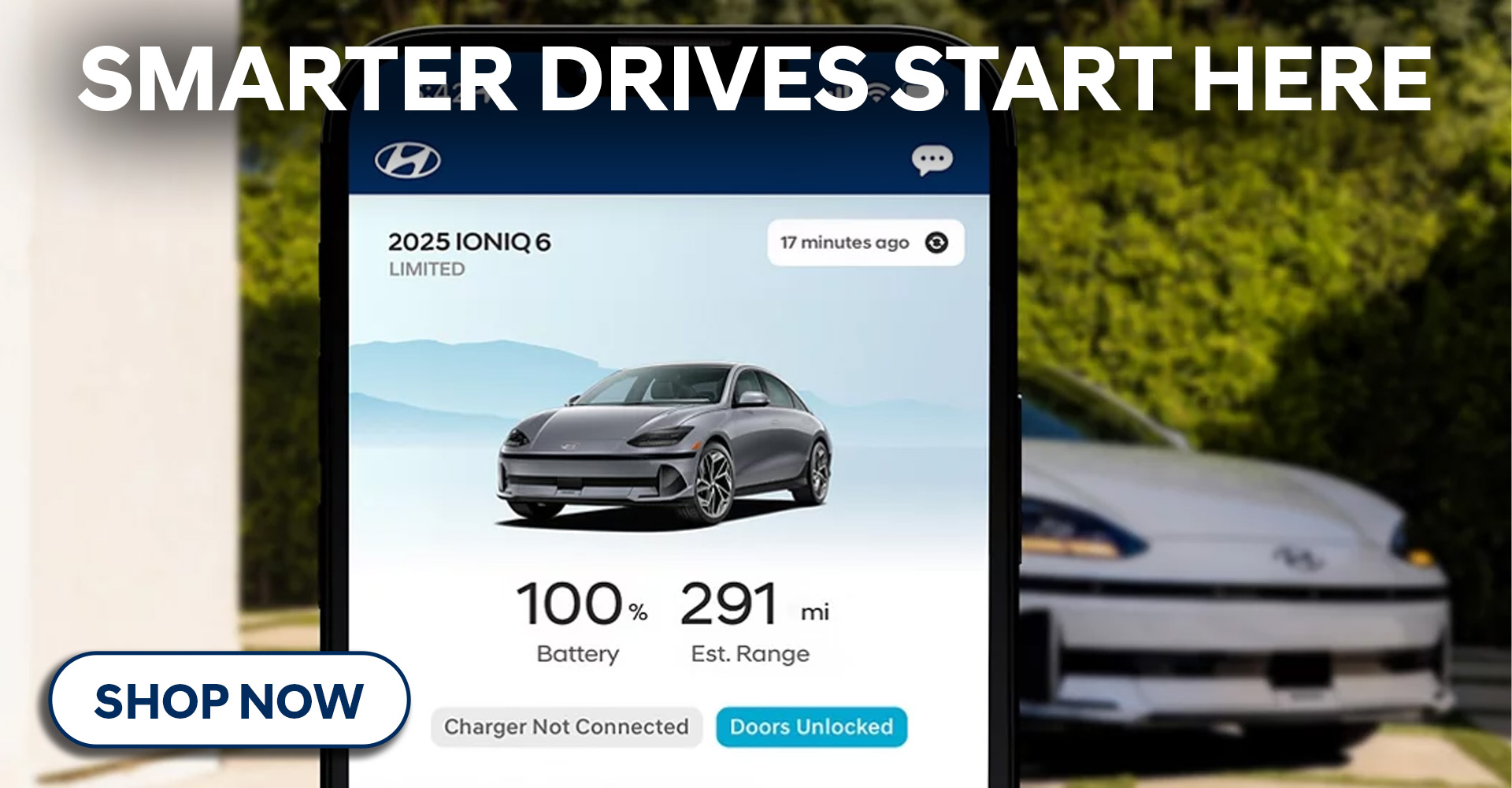
Discover the Benefits of Hyundai Bluelink
Hyundai Bluelink is an innovative connected car service that seamlessly integrates your vehicle with your digital lifestyle. From remote access to real-time diagnostics, Hyundai Bluelink offers a suite of features designed to make your drive safer, smarter, and more convenient. Whether you’re warming up your car on a chilly morning or locating it in a crowded parking lot, the Bluelink Connected Car Service gives you ultimate control, right from your smartphone. With the MyHyundai with Bluelink app, your vehicle is always within reach. Keep reading to learn more and head to Preston Hyundai of Millsboro to see how it works and explore each of the Hyundai Bluelink packages.
What is Hyundai Bluelink® and How Does It Work for You?
Bluelink® is Hyundai’s smart technology that keeps you connected to your car—wherever you are. Think of it as a personal assistant for your vehicle, sending and receiving important updates to help keep you informed, safe, and in control. Using an enhanced cellular network with automatic roaming, Bluelink ensures a strong connection and gives priority to emergency requests when you need them most.
Inside your vehicle, Bluelink combines GPS, voice commands, and access to a live support team for select services. Here’s what that means for you:
- Automatic emergency help if you’re ever involved in a collision.
- Voice-activated destination search and the ability to control key vehicle functions remotely.
- On-demand assistance and real-time updates that offer extra peace of mind whenever you’re on the road.
Choosing the Right Bluelink Package for You
Once your complimentary or trial period ends, Hyundai makes it easy to continue enjoying the benefits of Bluelink by offering a variety of package options tailored to your needs. Owners can choose from several subscription groupings, including Connected Care, Connected Care + Remote, Connected Care + Guidance, or the all-in-one Connected Care + Remote + Guidance package. Whether you’re looking for essential safety features, convenient remote controls, or advanced navigation tools, there’s a package that fits the way you drive and stay connected.
Hyundai Bluelink Connected Car Service with MyHyundai App
Hyundai’s MyHyundai with Bluelink app puts powerful control of your vehicle right at your fingertips. Once installed and paired with a compatible Hyundai model and active Bluelink account, the app allows users to remotely check fuel levels, view vehicle status, and receive alerts if doors or windows are left open. It offers convenient features like remote start with customizable climate settings, remote locking and unlocking, and even vehicle location tracking with horn and light activation. The app also includes vehicle safeguard alerts such as speed, curfew, and geo-fencing notifications. Whether it’s setting the temperature before you get in or keeping tabs on your car’s security, MyHyundai with Hyundai Bluelink enhances the driving experience with smart, connected technology.
Vehicle Management
The MyHyundai with Bluelink app offers a powerful feature called Vehicle Health, designed to keep you informed about your Hyundai’s condition and maintenance needs. With an active Bluelink subscription, you can view your vehicle’s current health status, check for any necessary services, and even access your complete service history—all from your smartphone. The app customizes maintenance recommendations based on your driving habits and lets you add services performed outside of Hyundai dealerships. You can conveniently schedule an appointment with a participating dealer through the app if service is needed. It also provides monthly health reports and diagnostic trouble codes to help you stay ahead of any issues.
Vehicle Monitoring
With the Hyundai Bluelink app, you’ll receive instant alerts if your vehicle moves without authorization, giving you peace of mind whether you’re monitoring a fleet or just keeping track of a family car. Bluelink also helps you stay on top of maintenance by sending timely reminders, so you never miss an oil change or service appointment. For added convenience, you can track your car’s exact location, making it easier to locate your vehicle in crowded parking lots or during a long road trip. Plus, you’ll have access to essential data like tire pressure, oil life, and more, allowing you to keep your car running smoothly. Whether you’re managing a fleet or ensuring your family’s vehicle is well-maintained, these innovative features keep you informed and in control.
Safety and Security Features
Hyundai’s Bluelink subscription includes a suite of assistance services designed to deliver peace of mind wherever the road takes you. With Enhanced Roadside Assistance, your vehicle’s information and location are automatically shared with trained operators for faster, more efficient help. In an emergency, you can press the dedicated SOS button to instantly connect with a Bluelink operator who will dispatch the necessary emergency services. Bluelink also features Automatic Collision Notification, which alerts the response center if your airbags deploy. A trained operator will attempt to contact you and send help—even if you’re unable to respond. These features work together to ensure you’re never alone in a crisis.
Pro Tips for Optimization
To get the most out of your Hyundai Bluelink experience, enable push notifications for important alerts and customize your preferences in the settings menu. Regularly updating your app ensures access to the latest features. For hands-free control, sync Hyundai Bluelink with smart devices like Alexa or Google Home. The system is designed to adapt to your lifestyle—so take a few minutes to personalize it for maximum benefits.
Bluelink vs. Bluelink+: What’s the Difference?
Both Bluelink and Bluelink+ offer the same great connected services—like remote start, door lock/unlock, EV battery scheduling, and more—giving you seamless control over your Hyundai from your smartphone. The key difference lies in availability and pricing. Bluelink is offered on most 2023 and older Hyundai models (excluding the Hyundai IONIQ 6) and comes with a low monthly subscription fee. On the other hand, Bluelink+ is included with select Hyundai vehicles starting with the 2023 IONIQ 6 and expanding to most 2024 and newer models at no additional cost. However, it’s not available on all trims—certain Hyundai Elantra, Elantra Hybrid, and Venue models do not support Bluelink+. Be sure to check your vehicle’s compatibility to take full advantage of these connected features.
How Much Does Hyundai Bluelink Cost?
With Bluelink+, Hyundai is making it easier than ever to stay connected—without breaking the bank. Original owners of eligible vehicles can enjoy powerful features like remote diagnostics, emergency assistance, and real-time vehicle health updates completely free of charge. Certified pre-owned buyers get an added perk: the Advanced package is included at no cost for the first year, while the Basic package remains free for the life of the vehicle. Even used car buyers can tap into the benefits, with a complimentary three-month trial of the Advanced package and lifetime access to the Basic package.
Navigation and Routing
With Connected Routing, you’ll enjoy real-time route suggestions that adapt to changing traffic conditions, ensuring you’re always on the most efficient path. Turn-by-turn Directions provide clear, easy-to-follow navigation, guiding you seamlessly from point A to point B without missing a beat. And if you’ve ever struggled to find your way after parking, Last Mile Navigation has you covered. It directs you from your parked car to your final destination, even on foot, up to a mile away—perfect for large parking lots or crowded areas. These smart features work together to save you time and reduce the stress of traveling. Connected Routing utilizes real-time and historical traffic data, giving you accurate predictions, precise arrival times, and adaptive route recalculations. Over time, it learns your preferred routes for a more personalized experience. Meanwhile, Last Mile Navigation ensures that, once you’ve parked, you’ll never lose track of your destination again. Simply use the MyHyundai with Bluelink app to get step-by-step guidance. Both features are available to active Bluelink subscribers with cellular service, and you can find more details in your owner’s manual or Hyundai’s helpful how-to guides. Enjoy a more connected and convenient journey every time you drive!
Get Connected
The benefits of Hyundai Bluelink are clear. With features that boost safety, convenience, and control, Hyundai Bluelink helps you stay connected and in command, whether you’re a new Hyundai owner or a tech-savvy driver. Head to Preston Hyundai of Millsboro to learn more and experience the benefits firsthand.
SHOP NOWConnect with us

Categories
Preston Hyundai of Millsboro
Address
28362 Dupont Blvd
Millsboro, DE 19966
Phone
- Call Us 302-297-4200
| Monday | 8:30AM - 8:00PM |
| Tuesday | 8:30AM - 8:00PM |
| Wednesday | 8:30AM - 8:00PM |
| Thursday | 8:30AM - 8:00PM |
| Friday | 8:30AM - 8:00PM |
| Saturday | 8:30AM - 6:00PM |
| Sunday | Closed |
| Monday | 7:00AM - 6:00PM |
| Tuesday | 7:00AM - 6:00PM |
| Wednesday | 7:00AM - 6:00PM |
| Thursday | 7:00AM - 6:00PM |
| Friday | 7:00AM - 6:00PM |
| Saturday | 8:00AM - 5:00PM |
| Sunday | Closed |
| Monday | 7:00AM - 6:00PM |
| Tuesday | 7:00AM - 6:00PM |
| Wednesday | 7:00AM - 6:00PM |
| Thursday | 7:00AM - 6:00PM |
| Friday | 7:00AM - 6:00PM |
| Saturday | 8:00AM - 5:00PM |
| Sunday | Closed |